
Meet our new Head of Node
November 09, 2026
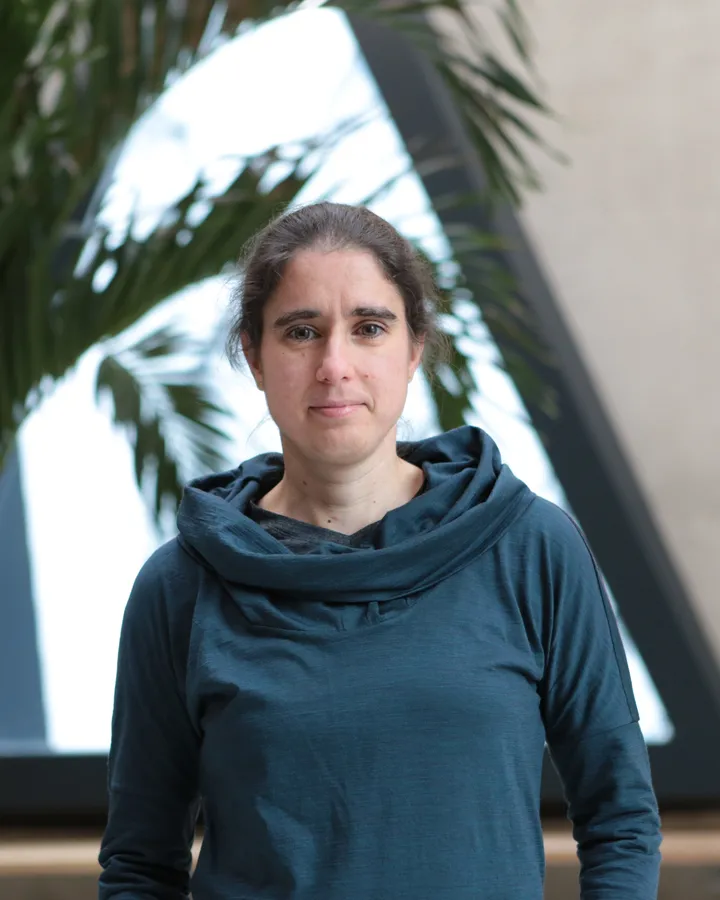
Prof. Emma Schymanski is the new Head of Node for ELIXIR Luxembourg. While the decision to hand her the reins this autumn was taken a few months ago, she had to step in earlier than anticipated following the sudden passing of Prof. Reinhard Schneider who had led the Node since its launch in 2017. In that difficult context, she talks about what makes research infrastructures so important today, pays tribute to her predecessor, underlines the strengths of the team he built, and shares her vision for the Node with us.
How did you get involved with ELIXIR initially?
While studying chemicals in the environment, characterising individual or general environmental exposures, I collaborated with European partners on developing databases and other resources to make information available to researchers in the field. Some of these colleagues were involved in ELIXIR Europe, for example from the metabolomics and toxicology communities. I also attended several ELIXIR BioHackathons, travelling there with our ELIXIR Luxembourg colleagues. One of our joint activities, PubChemLite, arose from the 2019 BioHackathon in Paris. At that point, I was not heavily involved with the Luxembourg Node, though. This happened more recently, when Reinhard started to plan his retirement and asked me if I would be interested in applying to be the next Head of Node.
How did you plan the transition with Prof. Schneider?
After I presented my vision for the Node to the Node Management Board and was selected to replace him last spring, we kept discussing about what was next for ELIXIR Luxembourg. Reinhard was one of the reasons I decided to join the Luxembourg Centre for Systems Biomedicine (LCSB) back in 2017. What he had built with the Bioinformatics Core was truly inspiring: he didn’t shy away from the investments needed to build a proper research infrastructure and to provide the resources that scientists need when it comes to bioinformatics and data management.
He was a man of few words so I cannot pinpoint a specific set of advice regarding the future of ELIXIR Luxembourg, but I learned a lot from him in the past almost 10 years. I especially appreciated how efficient he was in meetings and how he gave a lot of autonomy to his team. Of course, I will have my own style as head of Node than he was, but as it is quite new for me to lead a team composed of mostly experienced scientists and R&D specialists, I will likely take several pages out of his book when it comes to running the team.
Speaking of the team, can you tell us more about who is behind ELIXIR Luxembourg?
The ELIXIR Luxembourg team is an interesting mix of people who bring diverse skills to the table. We have computer scientists who focus on developing resources for systems biology approaches, data scientists who provide trainings in bioinformatics and system administrators who maintain the infrastructure we need to host and provide secure access to data. They work alongside data stewards and other ELIXIR experts who ensure that research data are properly captured, curated and managed, going from clinical information to standardised datasets that can be used for research purposes. And of course, there are web developers who apply their skillsets to create better interfaces for all users.
We are quite complementary and good at bouncing ideas off each other, which is great to move forward and innovate. We are also very much embedded within the LCSB and the Luxembourg National Data Service (LNDS), the two institutions that are involved in the Node. The Deputy Head of Node, Dr Wei Gu, is based at LNDS for example. It makes for an unusual structure, and Wei and I are already working on how to better define how the team is organised and how the Node can work effortlessly as a single entity.
And what is the key expertise of the Node after almost a decade?
ELIXIR Luxembourg has focused strongly on translational medicine so far, meaning that as a research infrastructure we aim to provide the resources that researchers need to handle properly and make the most of clinical and biological data. For example, ELIXIR Luxembourg offers technical solutions for long-term data hosting and a centralised platform designed to increase the visibility of biomedical datasets. We have also created DAISY, a web application designed to help biomedical research institutions map, manage, and track their data and data flows. There is of course much more and people can browse our full list of services and find upcoming training courses on our website.
If we want to narrow it down to a few keywords, as our Node works with sensitive data, we have quite a lot of expertise when it comes to providing safe, GDPR-compliant data access to third parties. We are experts at making and keeping data Findable, Accessible, Interoperable and Reusable (FAIR) as well. Due to our strong connection to the LCSB, we also have a unique skillset when it comes to developing knowledge repositories to describe disease mechanisms, such as the Parkinson’s disease Map and COVID-19 Map.
Now that you are joining the team, what will you bring to the table?
Resources that help scientists access the information they need for their research have become crucial in many scientific fields, so has the research infrastructure that allows us to manage the vast amount of data we have to collect and analyse. This is why I have contributed to initiatives such as the NORMAN Suspect List Exchange (NORMAN-SLE) to exchange expert knowledge via lists of chemicals and MassBank, an open-source mass spectral library. I have been involved in projects linked to FAIR data and open science in Europe for over 15 years now, so I am comfortable with many aspects of what ELIXIR does, however I am not an expert when it comes to translational medicine and clinical data.
ELIXIR Luxembourg has been successful as a frontrunner in that specific niche, but now is the time to review and refine the scope of our activities, especially as the research landscape in Luxembourg has evolved in this time. This is where I hope to contribute my experience with chemical and environmental data. While over the past decade many large genomics projects have built the infrastructure needed to share and use biomedical data, we are still lacking the equivalent for exposomics. This is the challenge we need to address now, especially as genomics alone has not delivered the anticipated breakthroughs in disease prevention and treatment. There are environmental contributions to most chronic diseases and it is time for us to embrace the bigger picture.
EIRENE is the European research infrastructure supporting large-scale exposome research. Following the launch of Xpose, the first Doctoral Training Unit on exposomics and health, discussions with EIRENE emerged and there will hopefully soon be a Node in Luxembourg. I think there are bridges to build between EIRENE and ELIXIR, bringing our complementary experimental and computational expertise together. Similarly, we are already involved in work packages on FAIR data for PARC, the European consortium that aims to develop next-generation chemical risk assessment. Our expertise on handling sensitive data in compliance with GDPR will be very useful in that context: Biomonitoring is at the interface of different disciplines, meaning partners who work with environmental data will have to collaborate with scientists who work with private patient data. It will require the proper infrastructure. In short, there are a lot of connections to develop between our Node and the emerging needs of exposomics.
What other future developments do you plan for the Node?
We need to improve the visibility of our activities. On the one hand, this means building use cases to demonstrate how the solutions we create meet the needs of scientists. This way, they see the added value of what we offer, which will increase the uptake of our developments. In the next years, it will also be critical that we keep modernising the infrastructure while ensuring long-term sustainability. In terms of training, we would like to develop offerings on AI for research. People still have a lot to learn when it comes to using this technology in a way that is safe and compliant with data protection. This is the type of knowledge that will make young researchers more competitive on a complex job market and our Node can help with that.
Developing synergies with local and international partners is high on my priority list. Our Node should work in closer collaboration with LCSB research groups, as joint projects mean better connections to the end users. We are in close contact with LNDS, the other participating institution of ELIXIR Luxembourg, and we are discussing how to strengthen our connection with important national players such as LIH, LNS and LIST, and with new actors like the Luxembourg Research Clinic and the Luxembourg Centre for Socio-Environmental Systems. Finally, joining new European consortia will be a key part of attracting additional funding, which is needed to maintain both resources and infrastructure – aspects that Reinhard was very skilled at achieving and we will strive to follow in his footsteps.
Ultimately, in the spirit of what Reinhard and his team have built over the years, here’s what should drive us forward: Making things as easy as possible for our users, thinking about what will serve existing and emerging needs from the research communities and national stakeholders, and focus on those activities with the greatest overall benefit for life sciences in Luxembourg.